What Causes Black Spots on a Bathroom Mirror and Can They Be Repaired?
What Causes Black Spots on a Bathroom Mirror and Can They Be Repaired?
You clean your bathroom mirror, but the black spots around the edges still do not go away. You try cleaning again, wondering whether they are dirt, mold, or hard water stains. But if the dark areas seem to be behind the glass, cleaning is usually not the real solution.
These marks are often a sign that the mirror's reflective layer or backing system has started to deteriorate. For most homeowners, the practical options depend on how far the damage has spread and whether the affected area can be covered or restored.
So what causes black spots on a bathroom mirror, why do they often start around the edges, and what can you do to slow the problem down? This guide explains what is happening and what to consider if you want your mirror to last longer.
What Are the Black Spots on a Bathroom Mirror?
Not every dark mark on a bathroom mirror means that the mirror itself is damaged. Some marks are simply dust, soap residue, hard water deposits, or other buildup on the glass surface. These can usually be removed with appropriate cleaning.
When the dark areas remain after normal cleaning and appear to be behind the glass, the situation is different. The problem usually involves deterioration of the mirror's reflective layer or backing rather than something sitting on the surface.
In a traditional silvered mirror, this type of deterioration is commonly known as desilvering. The reflective surface is a thin layer of metallic silver protected by additional layers behind the glass. When moisture, chemicals, or other corrosive factors reach the reflective system, the silver layer can corrode and lose reflectivity. The damage can appear as black spots, darkened areas, or cloudy sections.
The National Glass Association notes that although the silver film is protected, it remains vulnerable to corrosion when exposed to chemicals or excessive moisture. Research on protected silver mirrors has also found that corrosion features can originate at defects in protective layers and develop through reactions at interfaces within the mirror structure. (National Glass Association; Applied Optics research)
One useful way to tell the difference between surface contamination and deterioration behind the glass is to look at where the discoloration occurs.
A mark on the glass surface can change or disappear after proper cleaning. A mark caused by deterioration behind the glass remains visible because the damaged area is part of the mirror's reflective system.
Why Do Bathroom Mirrors Develop Black Spots?
Desilvering is usually the result of several conditions affecting the mirror over time rather than a single cause. Moisture, chemical exposure, edge conditions, and damage to the backing can all affect the durability of the reflective system.
Moisture and Humidity
Bathrooms naturally expose mirrors to steam, condensation, and humid air. Excessive moisture can contribute to deterioration of mirror backing and reflective layers. The National Glass Association identifies excessive moisture and humidity as conditions that can shorten the service life of flat glass mirrors and recommends appropriate ventilation and installation practices for humid environments.
Good bathroom ventilation helps control excessive humidity, but ventilation alone does not determine how a mirror will perform over time. The mirror construction, edge condition, backing, and installation environment also matter.
Water Exposure Around the Edges
Mirror edges are more vulnerable to water exposure than the center of the glass. Water can collect along the lower edge or reach processed edges through splashing and condensation.
The National Glass Association explains that liquid contacting mirror edges can cause what the glass industry calls black edge. Its fabrication guidance also highlights the lower edge of vertically installed mirrors because condensation can collect there.
This helps explain why dark areas often appear around the perimeter of a bathroom mirror before becoming noticeable elsewhere.
Cleaning Products
Some cleaning products can damage the materials behind a mirror. The National Glass Association recommends avoiding acidic, alkaline, and abrasive cleaners. It also advises against commercial mirror cleaners containing ammonia or vinegar and recommends keeping cleaning liquids away from the mirror edges and backing.
Using an aggressive cleaner can therefore make an existing problem worse, particularly when liquid reaches the mirror edges or backing.
Damage to the Edges or Backing
A mirror is more than a sheet of glass with a reflective surface. Fabrication, handling, installation, and long term exposure can all affect the condition of its edges and backing.
The National Glass Association states that fabrication processes must protect the mirror backing and edges to reduce the risk of black edge. Its fabrication guidance also addresses residues from cooling and polishing processes and recommends that compatible neutral pH edge sealants can be used for certain processed edges when specified by the manufacturer.
This means mirror age is not the only factor that affects long term performance. Moisture exposure, cleaning practices, edge condition, and installation conditions also matter.
Can Black Spots Caused by Desilvering Be Repaired?
The answer depends on where the damage has occurred and how extensive the deterioration is.
Cleaning Cannot Restore Damaged Backing
Once the reflective layer has deteriorated, cleaning the front surface of the glass cannot restore the damaged area.
Using a stronger cleaning product is not a solution. Cleaning chemicals that reach the edges or remain there for too long can cause additional damage.
A Frame Can Hide Minor Edge Damage
When black spots are limited to the outer edge and most of the mirror still provides a clear reflection, a frame or trim can cover the affected area and improve the appearance.
This does not repair the damaged reflective layer. It simply hides the visible damage. When the main viewing area remains clear, framing can extend the practical use of the mirror without replacing the entire piece.
Professional Resilvering Can Restore the Reflective Layer, but It Is Not Always Practical
Resilvering is a professional restoration process that removes the damaged reflective coating and applies a new reflective layer to the prepared glass. It is a specialist procedure rather than a normal household repair.
This type of restoration makes more sense for mirrors that have sentimental value, unusual dimensions, antique value, or another reason that makes replacement difficult. For an ordinary bathroom mirror, the condition of the glass, the availability of restoration services, and the overall cost should all be considered before choosing this route. Professional conservation work on historic silvered mirrors also shows that damaged reflective surfaces can require specialist treatment rather than ordinary cleaning. (Cooper Hewitt Smithsonian Design Museum)
Replacement Is Often More Practical for Extensive Damage
When deterioration has spread across a large area, continues to worsen, or affects the main viewing area, replacement is often the more practical choice.
The decision also depends on the size and overall condition of the mirror, the extent of the damage, the cost of professional restoration, and the cost of a replacement.
How to Reduce the Risk of Black Spots on a Bathroom Mirror
Good moisture control, suitable cleaning, and proper care of the mirror can reduce the conditions that contribute to deterioration.
Choose a Mirror With Good Corrosion Protection
Traditional silvered mirrors commonly use a copper layer and protective backing paint to protect the silver reflective layer.
The National Glass Association and the Glass Association of North America combined in 2018, and the current manual is published by NGA as the GANA Glazing Manual. The manual explains that copper can be deposited directly over the silver layer to protect it from oxidation and that the industry has also developed copper free processes that resist silver oxidation.
The advantage of a copper free mirror does not simply come from removing the copper layer. The important difference is the protection system used around the silver layer. Copper free mirror processes use alternative protective and passivation layers to protect the silver and reduce the opportunity for moisture, oxygen, and other corrosive substances to reach it. Research on protected silver mirrors shows that the composition of the protective layers, their interfaces, and defects within those layers can affect how corrosion begins and develops. (Applied Optics research)
If the mirror has cut, polished, beveled, or otherwise processed edges, it is also worth checking whether the manufacturer provides specific edge protection or sealing requirements.
If a frame is used, the installation still matters. A frame can reduce direct exposure of the mirror edge, but it does not replace proper backing protection or edge treatment. The installation should also prevent moisture from remaining trapped between the mirror and the frame.
Keep the Mirror Edges Dry and Maintain Good Bathroom Ventilation
Keep water from remaining on the mirror edges for long periods. After using the bathroom, wipe away water that has collected on the mirror, especially along the lower edge.
Good ventilation can also help reduce excessive humidity. This is particularly useful in bathrooms where steam and condensation are frequent.
Use Suitable Cleaning Products
Avoid highly acidic, highly alkaline, abrasive, ammonia based, or otherwise aggressive cleaning products. Do not allow cleaning liquid to collect around the mirror edges or remain there after cleaning.
Frequently Asked Questions About Black Spots on Bathroom Mirrors
Are black spots on a bathroom mirror mold?
Not necessarily. When dark spots remain after normal cleaning and appear to be behind the glass, they can indicate deterioration of the mirror's reflective layer or backing rather than mold on the surface.
Can you clean black spots off a bathroom mirror?
If the marks are on the glass surface, proper cleaning can remove surface residue. When the discoloration is behind the glass, the cause is different and may require restoration or replacement depending on the extent of the damage.
Why do bathroom mirrors turn black around the edges?
Mirror edges are more exposed to moisture, condensation, splashing, and other conditions that can affect the reflective system. Water collecting around the lower edge can also increase the risk of edge deterioration.
Should you replace a bathroom mirror with black spots?
Replacement becomes more practical when the deterioration is widespread, continues to spread, or affects the main viewing area. A mirror with limited edge damage can also remain usable when the affected area can be covered effectively.
Final Takeaway
Desilvering is a deterioration of the mirror's reflective system, and the best response depends on how far the damage has progressed. Limited edge damage may be covered with a frame, professional resilvering can be considered for mirrors worth restoring, and extensive damage may make replacement the more practical option.
Prevention starts with the mirror itself and continues after installation. The protection around the reflective layer, edge treatment, installation conditions, humidity control, and everyday cleaning all play a role in long term mirror performance.
For B2B bathroom mirror projects, choosing an appropriate mirror construction and understanding how it should be installed can help reduce the conditions that contribute to black edge and premature deterioration. Contact our team to discuss mirror options for your next project.
Related products
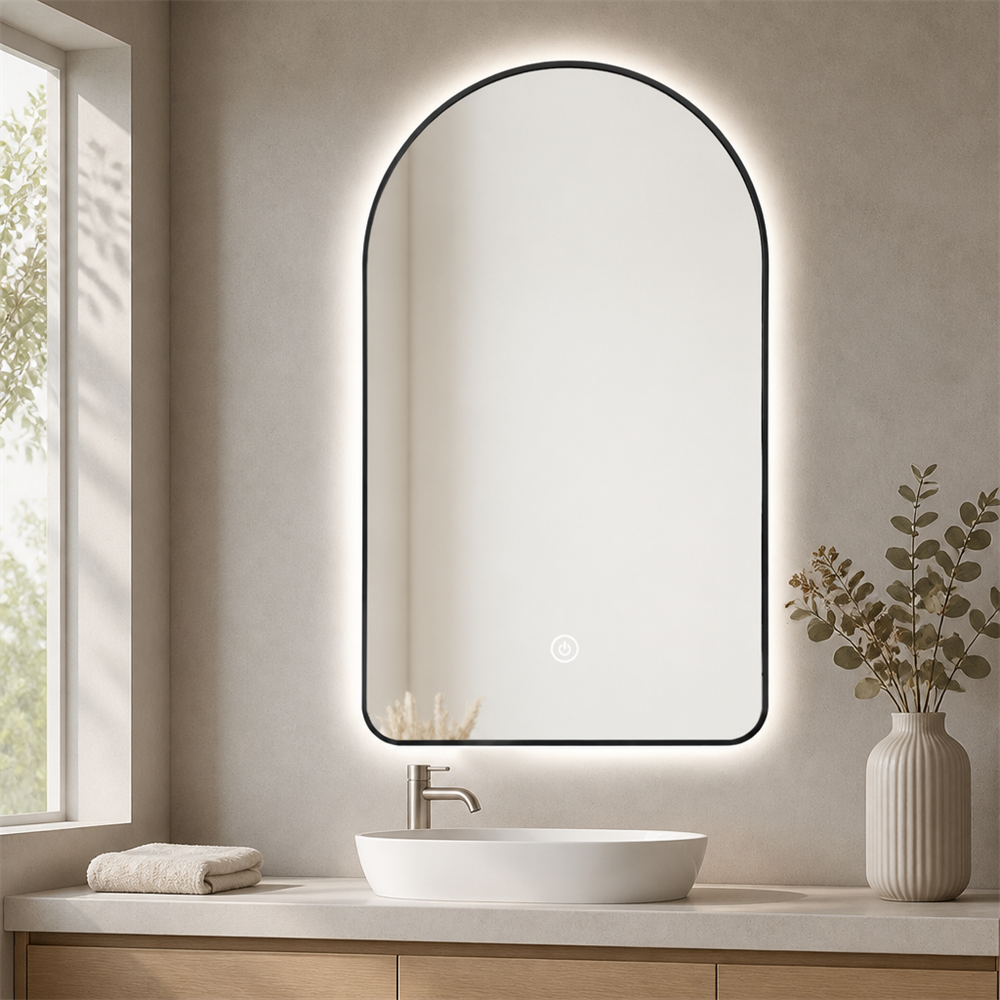 Black Aluminium Framed Arch LED Vanity Mirror Backlit Touch Controlled Wall Mounted Bathroom Mirror, Stepless Dimmable IP44 Moisture Resistant 5mm Copper-free Silver Mirror for Hotel & Apartment Renovation
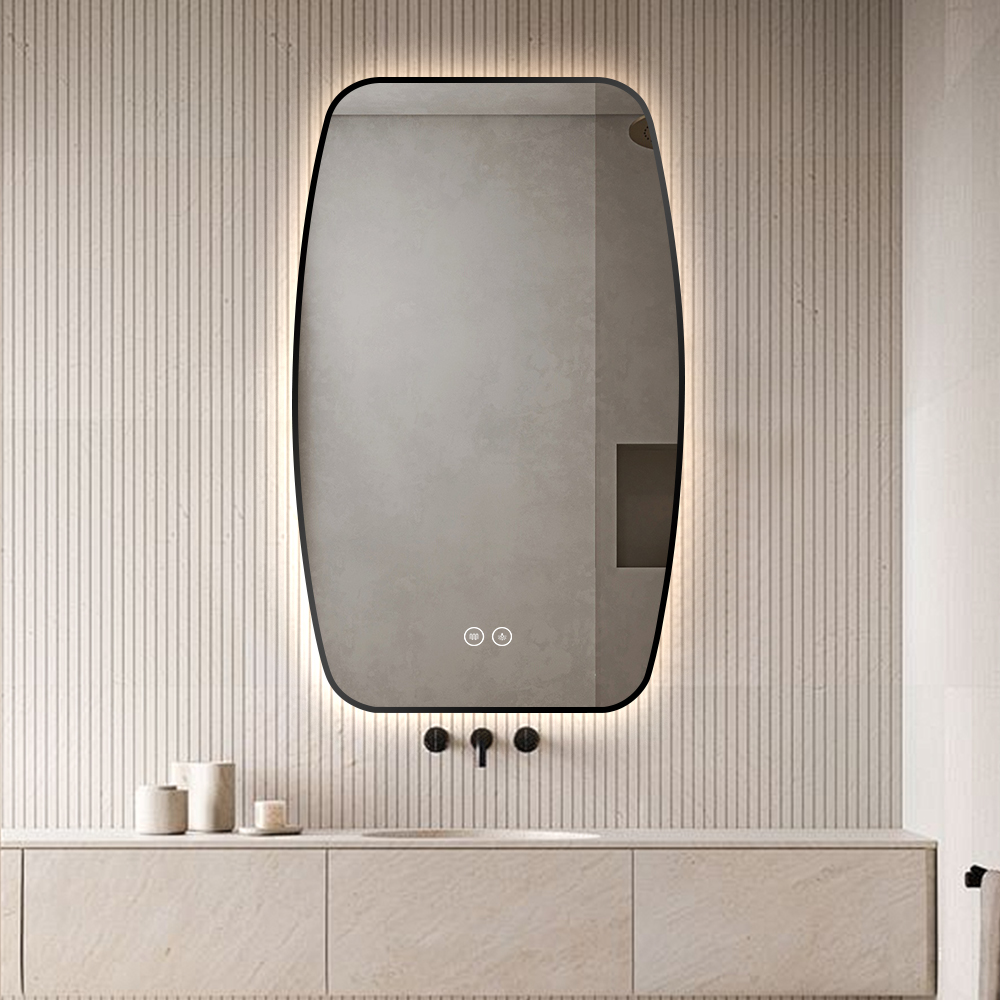 BOLEN Black Aluminum Frame Irregular LED Bathroom Mirror Backlit Touch Sensor Wall Mounted Makeup Mirror for Hotel Apartment Project, Dimmable IP44 IP54 Waterproof 5mm Copper Free Silver Mirror