Bathroom Mirror Shapes Are Changing: What Does It Mean for Buyers?
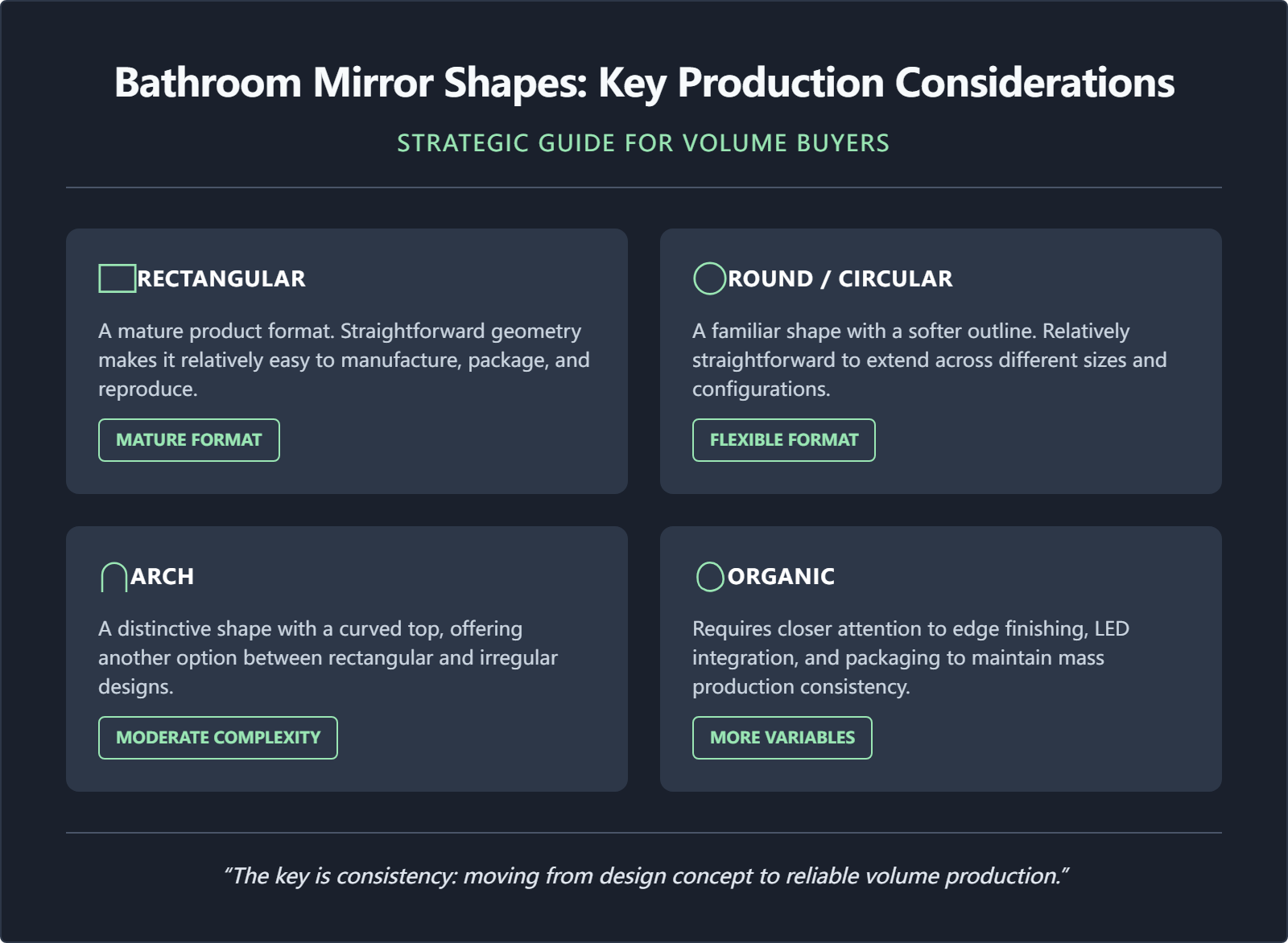
A new bathroom mirror design may look like a simple change from a rectangle to an arch, or from a regular outline to an asymmetrical curve. For brands and retailers buying mirrors in volume, however, a different shape can introduce more variables during product development and production.
This is becoming more relevant as interest in different mirror shapes continues to grow. According to Houzz’s 2024 U.S. Emerging Winter Trends Report, searches for “oval mirrors” increased by 41% year over year, while searches for “oval bathroom vanity mirrors” grew 5.5 times compared with the previous year. Design media are also highlighting more curved, sculptural, and organic mirror designs in current bathroom trends.
For bathroom brands, bathroom and home retailers, wholesalers, and e-commerce brands developing private-label products, this means there are more shapes to consider when developing a product range. The practical question is what happens when a new shape moves from a design idea to a product that needs to be produced consistently and reordered over time.
Rectangular Bathroom Mirrors Remain a Mature Product Shape
Rectangular mirrors are still a practical choice for many bathroom applications. Their straightforward geometry makes them relatively easy to size, manufacture, package, and fit into different bathroom layouts.
For buyers, this also makes rectangular mirrors easier to extend into different sizes, frame styles, and lighting configurations. Once a product has been developed and its specifications are established, repeat production is generally more straightforward.
This does not make rectangular mirrors the only option. It simply means that buyers already have a mature product format to work with, while newer shapes can add more variety to a product range.
What Is the Difference Between Round, Arch, and Organic Mirrors?
Different shapes bring different design characteristics, but they can also create different production considerations.
Round Bathroom Mirrors
Round mirrors have a simple and familiar outline and can give a bathroom a softer appearance than a rectangular mirror.
From a product development perspective, round mirrors are also relatively straightforward to extend across different sizes. They can be used with different frame designs, lighting arrangements, and functions without changing the basic shape of the product.
Arch Bathroom Mirrors
Arch mirrors combine a straight lower section with a curved top. This gives them a more distinctive appearance while keeping a relatively regular overall structure.
For brands and retailers, an arch shape can provide another option between conventional rectangular mirrors and more irregular designs. The specific frame, lighting, and proportions can then be adjusted depending on the product concept.
Organic and Asymmetrical Bathroom Mirrors
Organic and asymmetrical mirrors allow much more freedom in the overall outline. Curved edges, uneven proportions, and irregular silhouettes can make a mirror more visually distinctive.
At the same time, irregular shapes can introduce more details that need to be controlled during production. Edge finishing, LED placement, functional components, and packaging all need to work with the final shape.
For products intended for repeated production, the key consideration is whether the design can be produced consistently rather than simply whether the shape looks good in a product concept.
What Should Buyers Check When Adding a New Mirror Shape?
When a new mirror shape moves into product development, several practical points are worth confirming early.
1. Shape Consistency
The outline needs to remain consistent from the sample to mass production. This is particularly important for asymmetrical or irregular designs, where small differences can be more noticeable.
2. LED and Function Integration
If the mirror includes LED lighting, defogging, touch controls, displays, or other functions, these components need to fit the shape and position of the mirror correctly.
A more complex outline can affect where lighting and other components can be placed, so these details should be confirmed during product development rather than after the shape has been finalized.
3. Packaging
The shape of the mirror also affects how it is protected during storage and transportation. Irregular or extended edges may require packaging to be designed around the actual product shape.
For buyers placing bulk orders, packaging should therefore be considered as part of the product specification.
4. Repeat Orders
A product may look right when the first samples are approved, but long-term purchasing also depends on maintaining the same specifications and appearance across later batches.
This is especially important for brands and retailers that plan to keep a particular mirror design in their product range.
What Does the Change in Mirror Shapes Mean for Buyers?
The growing range of bathroom mirror shapes gives brands and retailers more options when developing or updating their product lines. Round, arch, organic, and asymmetrical designs can all serve different product concepts and visual styles.
For buyers, the main consideration is how well a chosen design can move from concept to consistent production. Shape, edge finishing, lighting, functions, packaging, and repeat-order consistency all need to be considered together.
As mirror designs continue to diversify, understanding these production details can help buyers evaluate new products more effectively.
If you are developing a new bathroom mirror design or considering a specific shape for your product range, BOLEN supports custom mirror shapes, sizes, and functions, as well as OEM/ODM services. You can share your target shape or reference design with us to discuss product development and bulk production requirements.
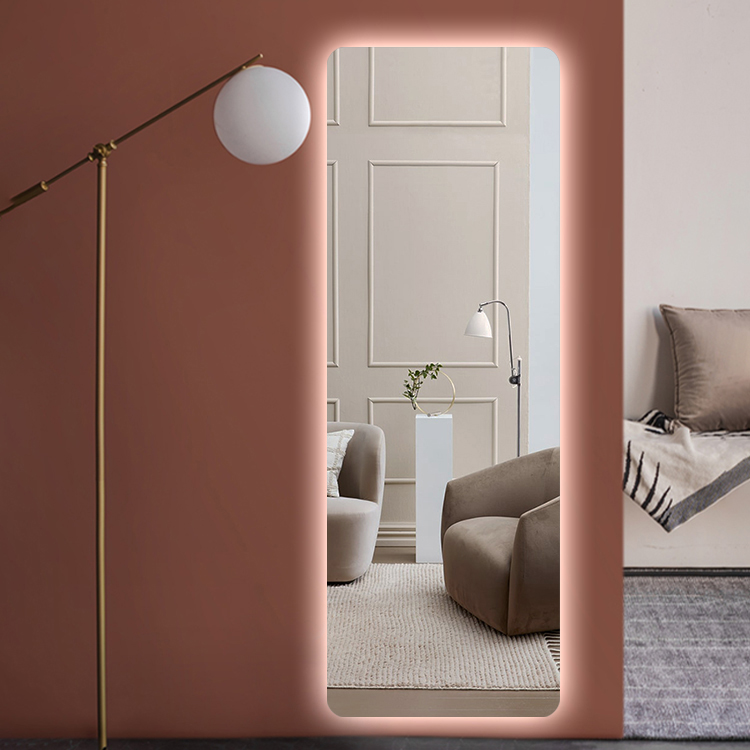 Frameless Rectangular LED Bathroom Mirror with Lights, Anti-Fog Wall-Mounted Vanity Mirror